
Roborock Q7 Max Robot Vacuums - Review and opinions
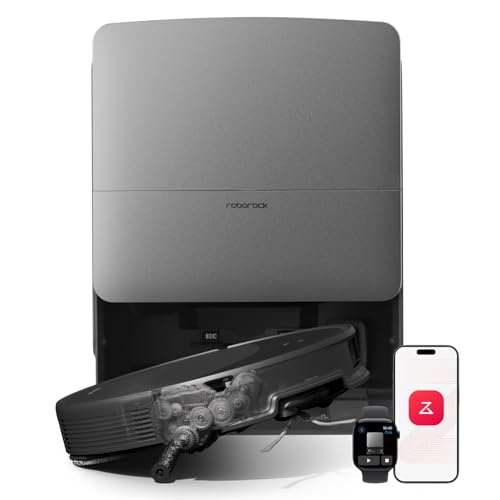


Dustbin and water tank
Is it worth it?
The Roborock Q7 Max fits best for a home that wants stronger everyday pickup, built-in mopping, and map-based cleaning without stepping up to a self-emptying tower. Its appeal is straightforward: 4,200 Pa suction, LiDAR navigation, and app-controlled no-go and no-mop zones give it the kind of route control that matters once furniture, rugs, and mixed floors enter the picture. The real trade-off is just as clear, though, because this is still a compact robot with a combined dustbin and water tank, not a hands-off dock system.
I would put this in the buy lane for someone who wants a capable all-in-one robot for daily floor upkeep and is comfortable emptying and refilling it as part of the routine. Skip it if your priority is true dock-level automation or if your home depends on 5GHz Wi-Fi, since this model only supports 2.4GHz. For the right layout, it is a practical, well-aimed cleaner; for the wrong one, the limits show up fast.
| Suction | 4,200 Pa |
|---|---|
| Navigation | PreciSense LiDAR with 3D mapping |
| Dock | Auto-docking and recharge |
| Mopping system | Vacuum and mop simultaneously with 30 water flow levels |
| Battery life | Up to 180 minutes |
| Dustbin and water tank | 470 ml dustbin and 350 ml water tank |
LiDAR Mapping
PreciSense LiDAR and 3D mapping are the core of the Q7 Max’s route planning.
That matters because a robot vacuum earns its keep when it can clean predictably around rooms, furniture, and boundaries instead of wandering. In practice, the payoff is cleaner room-by-room control, while the main limitation is that this advantage is most useful in homes where the layout is stable enough to map well.
Vacuum and Mop Control
The Q7 Max vacuums and mops in one pass, and the electronic pump offers 30 water flow levels.
That is a strong fit for buyers who want one machine to handle dust and light mopping without switching devices. The trade-off is routine upkeep, since the combined tank still needs refilling and the mop function is best treated as a daily maintenance tool, not a replacement for deeper floor washing.
Pet Hair Handling
The all-rubber main brush is built to resist tangles from long hair and pet hair, and the suction level gives it room to keep up with messy floors.
That combination matters most in homes where hair buildup is the main reason to buy a robot in the first place. It is a practical advantage, but not a promise of zero upkeep, because hair-friendly brushes still need periodic cleaning.
App and Boundary Control
No-go zones, no-mop zones, custom routines, scheduling, and voice control through Alexa or Google Home make the Q7 Max easier to fit into a real household schedule.
That is the kind of control that turns a robot from a novelty into a habit. The limitation is simple: the app features help most when the home network and room layout cooperate, and the 2.4GHz-only Wi-Fi support narrows the setup lane.
Use evaluation
In a typical living room with rugs, chair legs, and a few tight corners, the Q7 Max’s strongest case is the way it combines mapping and obstacle handling into a cleaner daily routine. The LiDAR setup, 3D maps, and obstacle detection matter because they reduce the amount of babysitting a robot usually needs, and the carpet boost adds a useful layer of confidence when the floor changes under it. That makes it a good fit for a home that wants the robot to cover more ground with less manual rerouting.
For pet hair cleanup, the all-rubber main brush is the detail that changes the day-to-day experience most. A brush designed to resist tangles is a real advantage in homes with long hair or shedding, and the 4,200 Pa suction gives the machine enough headroom to pull debris from cracks and carpet edges instead of just skimming the surface. The trade-off is maintenance, not performance theater: the combined 470 ml dustbin and 350 ml water tank are fine for longer sessions, but they still put the burden of emptying and refilling back on you.
Mixed floors are where the Q7 Max’s mopping setup becomes either a strength or a compromise. Vacuuming and mopping at the same time, plus 30 water flow levels, gives you real control over how wet the floor gets on tile, vinyl, laminate, wood, or marble. That flexibility is valuable in a home that wants one robot to handle dust and light floor refreshes, but it is not the same thing as a dedicated mop system with a larger reservoir or more aggressive wash cycle. If you want a simple, compact cleaner for regular upkeep, it lands well; if you want a nearly hands-off floor-care station, this is not that route.
The battery and coverage numbers also make sense for a normal-sized home routine. Up to 180 minutes and as much as 3,229 sq ft of coverage put it in the range where a full session can cover a lot of floor before it heads back to the dock, and automatic recharging with resume keeps the interruption low. The catch is compatibility and fit: the body measures 13.9 x 13.8 x 3.8 inches, and the app setup is built around 2.4GHz Wi-Fi, so this is a better match for a home that already has the network and clearance to support it.
Pros
- Strong 4,200 Pa suction for debris, cracks, and carpets.
- LiDAR mapping with no-go and no-mop zones gives useful route control.
- Vacuums and mops together with 30 water flow levels.
- All-rubber brush is well suited to pet hair and long hair.
Cons
- No self-emptying dock, so routine emptying and refilling stay part of ownership.
- 2.4GHz Wi-Fi only, which narrows compatibility in some homes.
- The combined tank is practical, but it still limits how hands-off longer sessions feel.
Community
User reviews
The visible rating sits around 4.0/5 and points to a broadly positive reception. It is useful as a quick buyer signal, but the practical details still matter more than the headline score. The visible sample now includes positive, mixed, and critical feedback for a more balanced picture.
Less than 10 months after purchasing a Roborock Q7 it is dead, completely. It fails to power on, won’t connect to the app, and is for all intents and purposes a paperweight. This happened after a ‘firmware update.
03 NOTE: If you'd like to skip the lengthy review, a list of pros and cons are at the bottom. Now, on with the review. First off, I had zero issue with connecting it to my home wifi. I included the steps I took in my.
It cleans especially well. This means the one disposable dust bag it comes with will fill up quickly so immediately buy dust bin bags-you will need them fast. Be sure you get the RoboRock app to set it up with. Setup.
03 This is my first robot vacuum and I'm in love with it! I love being able to be doing something else, folding laundry, making dinner etc while this is cleaning the floors. Harry, as I've named him, is my cleaning.
Comparison
| Attribute | Roborock Q7 Max Current | roborock Q8 Max | Roborock Saros 20 | Roborock Saros 10R |
|---|---|---|---|---|
| Price | Out of stock | Out of stock | $1,599.99 | $1,299.99 |
| Battery life | Up to 180 minutes | Up to 240 minutes | 180 minutes | - |
| Suction | 4,200 Pa | 5,500 Pa | 36,000 Pa | 22,000 Pa HyperForce |
| Navigation | PreciSense LiDAR with 3D mapping | PreciSense LiDAR with obstacle avoidance | StarSight Autonomous System 2.0 with 3D ToF sensors and RGB camera | StarSight Autonomous System 2.0 with 3D sensing and VertiBeam obstacle avoidance |
| Dock | Auto-docking and recharge | Self-charging dock included | RockDock with hot water washing, hot air drying, self-cleaning, and auto dust emptying up to 65 days | Multifunctional Dock 4.0 with self-emptying, mop washing, hot air drying, tank refilling, and detergent dispensing |
| Mopping system | Vacuum and mop simultaneously with 30 water flow levels | Vacuum and mop simultaneously with 30 water flow levels | Vacuum and mop with FlexiArm edge reach and auto-wash dock care | Dual spinning mops with FlexiArm Riser technology and auto mop lift |
| Editorial score | 74/100 | 74/100 | 78/100 | 78/100 |
Against a robot with LiDAR mapping but no mop function, the Q7 Max is the better pick if you want one machine to cover dust and light floor refreshes in the same run. The plain mapping route still makes sense for buyers who care more about dry pickup and want to keep maintenance simpler, but the Q7 Max adds more day-to-day utility for mixed floors and busy kitchens.
Compared with a self-emptying model, this one is for buyers who value the robot’s cleaning stack more than dock automation. A self-emptying route reduces routine touchpoints, while the Q7 Max keeps the footprint smaller and the price logic easier to justify if you are comfortable handling the bin and tank yourself. If your top priority is a near-hands-off station, the self-emptying route wins; if you want strong navigation, mopping, and pet-hair handling in one compact unit, this is the more direct fit.
Compare with Compare this model This product stays fixed; add a recommended alternative or search another model in the category.
Compare with
Add a second model to activate the direct comparison.
Recommended models

No products match that filter combination.
Is the Roborock Q7 Max robot vacuum worth it?
The Q7 Max makes the strongest case in homes that want a smart, map-driven robot with real vacuum-and-mop utility. Its 4,200 Pa suction, LiDAR navigation, no-go and no-mop controls, and pet-hair-friendly brush give it a clear role in everyday cleaning, and the 180-minute runtime plus auto-docking help it cover a lot of ground before it needs attention. If the current offer is in the right range, this is a sensible buy for mixed floors and regular upkeep. The reservation is just as clear: this is not the best route if you want self-emptying convenience or if your network is built around 5GHz only. The Q7 Max asks you to keep up with the bin and tank, and that trade-off is fine only when you value cleaning control more than full automation. For that buyer, it is a well-aimed robot vacuum and mop rather than a compromise.
FAQ
Does it work well in mixed-floor homes?
Yes. Carpet, laminate, tile, vinyl, wood, and marble are all explicitly supported, and the adjustable water flow helps keep the mop side more controlled on hard floors.
Is it a good choice for pet hair?
Yes. The all-rubber brush and 4,200 Pa suction make it a sensible pick for homes where hair buildup is a daily issue.