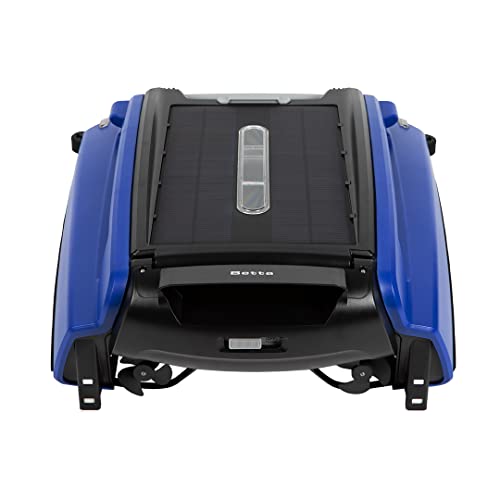
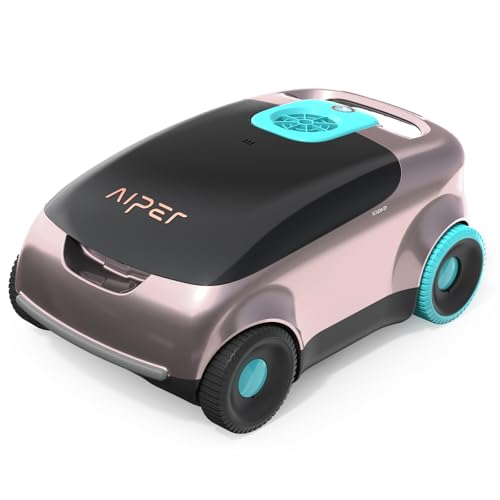
Cordless robotic pool cleaners
Useful when this use case matters more than a generic top pick.
See use-case analysis
Key points
- Real fit
- Dynamic selection
13 Models reviewed
Reviews and comparisons for Pool Cleaning Robots, focused on pool fit and coverage route so you can choose by use case and budget.
These shortcuts come from the category's active use cases and stay in sync with each cohort analysis block.
Useful when this use case matters more than a generic top pick.
See use-case analysisUseful when this use case matters more than a generic top pick.
See use-case analysisUseful when this use case matters more than a generic top pick.
See use-case analysisUseful when this use case matters more than a generic top pick.
See use-case analysisPractical snapshot of Pool Cleaning Robots: current prices, documented specs, and the axes where reviewed products differ most.
Ranking computed with the editorial score specific to this category.
Search by text, sort products, and surface the key features that matter most to you.
7 products


No products match that search or filter combination.
We compare 13 published pool Cleaning Robots models across catalog depth, editorial score, user average on a 0-100 scale, average price and the axes where each maker stands out.
73 reviews
View Beatbot catalog671 reviews
View WYBOT catalogBeatbot leads editorial average (78/100); WYBOT stands out with users (80/100); AIPER has the lowest average price ($340).
Premium
Budget
Quick comparisons
Select 2 products to see the comparison in this section.


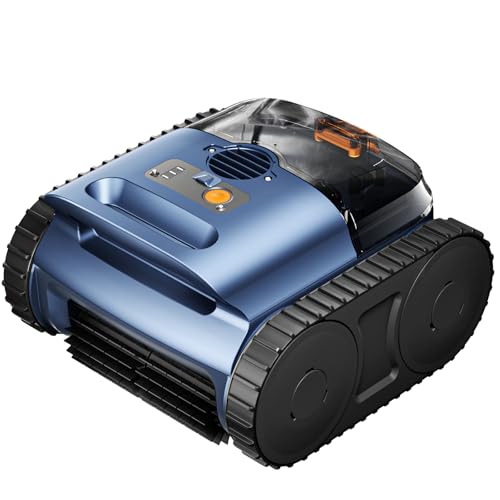

No products match that filter combination.
Use-case analysis
This section separates Cordless robotic pool cleaners within Pool Cleaning Robots using the current category data, visible reviews and price context so the recommendation fits a concrete use case instead of mixing every model together.
Updated: 2026-10-17 00:36 UTC
Use-case analysis
This section separates Corded robotic pool cleaners within Pool Cleaning Robots using the current category data, visible reviews and price context so the recommendation fits a concrete use case instead of mixing every model together.
Updated: 2026-10-17 00:36 UTC
Use-case analysis
This section separates Robotic pool cleaners for above-ground pools within Pool Cleaning Robots using the current category data, visible reviews and price context so the recommendation fits a concrete use case instead of mixing every model together.
Use-case analysis
This section separates Robotic pool cleaners for walls and waterline within Pool Cleaning Robots using the current category data, visible reviews and price context so the recommendation fits a concrete use case instead of mixing every model together.
Updated: 2026-10-17 00:36 UTC
A pool cleaning robot should be judged by explicit evidence for real buyer fit, practical setup, maintenance friction, performance limits, and whether the product solves the intended use case without unsupported claims.
| Use case | Prioritize | Avoid paying more for |
|---|---|---|
| Small Above Ground | Fit, Friction, Evidence | Headline extras that do not improve this specific use |
| In Ground Family Pool | Fit, Friction, Evidence | Headline extras that do not improve this specific use |
| Leaf And Sand | Fit, Friction, Evidence | Headline extras that do not improve this specific use |
| Cordless Routine | Fit, Friction, Evidence | Headline extras that do not improve this specific use |
Pool Fit materially changes whether this pool cleaning robot fits the intended buyer route.
Coverage Route materially changes whether this pool cleaning robot fits the intended buyer route.
Power Model materially changes whether this pool cleaning robot fits the intended buyer route.
Filtration Brushes materially changes whether this pool cleaning robot fits the intended buyer route.
Handling Maintenance materially changes whether this pool cleaning robot fits the intended buyer route.
If this point is not clear in the product evidence or review, the recommendation can overstate the real fit.
If this point is not clear in the product evidence or review, the recommendation can overstate the real fit.
If this point is not clear in the product evidence or review, the recommendation can overstate the real fit.
If this point is not clear in the product evidence or review, the recommendation can overstate the real fit.
We keep the verdict tied to what is actually supported by product evidence. In this category, the biggest question is not whether a robot sounds impressive, but whether it clearly fits the pool and cleaning route it is being sold for. A robot meant for an above-ground pool is judged differently from one positioned as a corded pool robot for larger in-ground pools, and a model that explicitly supports wall and waterline cleaning has a different buyer case than a floor-only cleaner.
That is why we focus on the specs that usually change the real recommendation: maximum pool length, maximum pool area, coverage, power type, and filter type. We translate those details into buyer consequences such as whether setup is simple, whether the robot is likely to match the pool shape and size, and how much day-to-day maintenance comes with owning it.
For pool-cleaning robots we review documented evidence around pool fit, coverage route, power model, filtration, brushes, handling, maintenance, price, and user feedback when useful.
Weight 22%. This axis evaluates Pool fit with criteria specific to the category and buyer route.
Technical measures
Reading context
Common cautions
Weight 24%. This axis evaluates Coverage route with criteria specific to the category and buyer route.
Technical measures
Reading context
Common cautions
Weight 18%. This axis evaluates Power model with criteria specific to the category and buyer route.
Technical measures
Reading context
Common cautions
Weight 20%. This axis evaluates Filtration brushes with criteria specific to the category and buyer route.
Technical measures
Reading context
Common cautions
Weight 16%. This axis evaluates Handling maintenance with criteria specific to the category and buyer route.
Technical measures
Reading context
Common cautions
Editorial judgement still leaves room for incomplete documentation, weak claims, or practical friction that a spec table does not fully capture.
Pool fit comes first because a robot can only be a good buy if the stated pool size, pool type, and cleaning route match your pool. Maximum pool length and area matter because they set the practical limit for where the robot is a credible option. Coverage matters because floor-only cleaning is a different promise from wall-climbing or waterline cleaning, and that difference can completely change the shortlist.
Corded and cordless robots are not interchangeable buyer routes. A corded model may make more sense when explicit evidence supports longer runs or larger pools, but cable handling can add friction. A cordless model may be more convenient for routine cleaning, but only when the evidence clearly supports that route rather than relying on vague convenience claims.
Filter type and brush setup matter because they affect what debris the robot is realistically equipped to handle and how much cleanup falls back on the owner. Fine filtration, active brushes, and similar features only help the verdict when they are explicitly supported. We also weigh maintenance friction: basket access, filter cleaning, consumables, and any vague compatibility details that could make ownership harder than the headline suggests.
We read listings through real pool-use scenarios rather than treating every robot as if it serves the same job.
In each case, the point is the same: show whether the robot is credible for the intended real-world use, not just attractive on a feature list.
Some products fall down because the evidence is thin where buyers need clarity most. We treat that carefully. Common red flags include assigning a robot to a route that is not explicitly supported, treating a headline feature as proven performance without source support, or leaving setup, compatibility, maintenance, or consumables too vague to judge daily use confidently.
We also avoid building recommendations on measurements or claims that are not present in the evidence. If a model does not clearly state pool length, coverage, power type, or filter details, that uncertainty can matter as much as the visible feature list.
Start with the route that matches your pool and your tolerance for daily friction. Choose a Robot with Cable Para Piscina Enterrada when explicit evidence makes it the clearest fit for your pool and cleaning needs. Choose a Robot Sin Cable when the convenience case is clearly supported and the trade-offs are acceptable. Choose a Robot with Paredes Y Linea De Flotacion only when wall and waterline coverage is explicitly evidenced. Choose a Robot Para Piscina Elevada when above-ground fit is clearly stated rather than implied.
As you compare products on this page, use the listed specs to narrow the field first, then use the maintenance and compatibility details to separate the easier long-term choice from the one that only looks good in a headline.
The right fit depends on explicit compatibility, not just general robot claims. Check whether the product is documented for above-ground pools, in-ground pools, floor-only cleaning, walls, or the waterline before you buy.
Corded robots rely on a power cable, while cordless robots run on a battery and reduce cable handling. Cordless models can be easier to set up, but buyers should confirm runtime, charging needs, and whether the cleaning cycle matches the pool size.
Only some models are built for wall and waterline cleaning, and that capability should be explicitly stated. If it is not documented, do not assume the robot will climb walls or scrub the waterline effectively.
Routine maintenance usually means emptying or rinsing the filter, checking brushes, and removing trapped debris after use. Models with top-access filters or washable parts can reduce daily friction, but the exact maintenance burden depends on the documented design.
Performance against leaves and sand depends on filtration, brush design, and the robot's intended coverage route. Fine debris handling should be supported by explicit filter evidence; otherwise, avoid assuming strong pickup on small particles.
Look for explicit details on pool compatibility, coverage type, power source, filter type, runtime, and cycle time. If a key feature is not clearly documented, it should not be treated as proven performance or used to narrow the buyer route.