
ECOVACS GOAT A3000 LiDAR PRO Robot Lawn Mowers - Review and opinions
Runtime
Is it worth it?
If you want a wire-free mower that can cover a medium-to-large yard without perimeter wire hassle, the GOAT A3000 LiDAR PRO is aimed squarely at that job. Its dual-LiDAR navigation, built-in edge trimmer, and app-based zone control make it relevant for buyers who want less weekend mowing and less string trimming afterward. The trade-off is that this is a premium-priced machine, and the real fit depends on whether your yard layout is organized enough to let a robot do most of the work.
Buy it if your priority is automation, clean borders, and a setup path that avoids boundary wire installation. Skip it if you want the lowest-cost way to keep a simple lawn tidy, because this model is built like a convenience-first upgrade, not a budget shortcut. The strongest case is time saved; the biggest reservation is that the value only makes sense when you actually use the app controls, zoning, and wire-free navigation to their full extent.
| Maximum area | Up to 3/4 acre |
|---|---|
| Maximum slope | Not stated |
| Installation | Wire-free, no perimeter wire or RTK antenna |
| Cutting width | 12.99 inches |
| Connectivity | Smart app control |
| Battery life | About 70 minutes |
Wire-Free Navigation
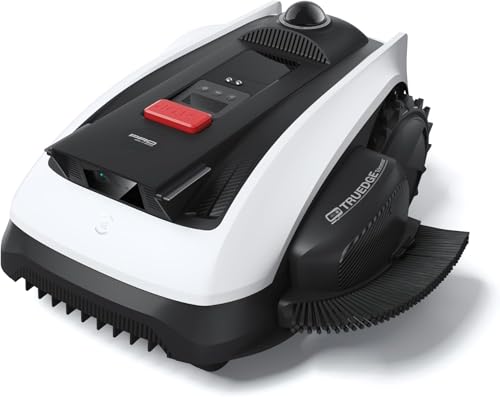
The main draw is the dual-LiDAR, wire-free setup that avoids perimeter wire and RTK antenna installation. That matters because it cuts out one of the most annoying parts of robot-mower ownership and makes the mower more appealing for people who want a cleaner first-day setup.
In practice, this is the feature that turns the GOAT A3000 into a true convenience product instead of a project. The trade-off is that buyers who want a dead-simple, always-on solution for a very messy yard will still need to spend time shaping the map and the zones.
Built-In Edge Trimmer
The integrated TruEdge trimmer is the feature that separates this model from many robot mowers that still leave a border for hand trimming. It is meant to clean up sidewalks, driveways, fences, and flower beds without making you come back with a string trimmer right away.
That matters most in the real weekly routine, because edging is often the part people hate least only after they stop doing it. The practical upside is less manual cleanup after each run; the limitation is that tight corners and awkward borders still reward a careful mapping pass.
App Control and Custom Zones
The ECOVACS app lets you edit maps, create mowing zones, set no-go areas, and adjust cutting height and speed. That makes the mower a better fit for yards that are divided into sections or have areas you do not want the machine entering.
This is the feature that makes the mower feel tailored rather than generic. It adds value for buyers who want to schedule around family routines or keep certain areas off-limits, but it also means the best experience comes from people willing to spend time shaping the layout instead of expecting one-button simplicity.
Battery and Fast Charging
The 7500 mAh battery and 189W fast charging are built for repeated maintenance cycles, not just one pass and done. The quick recharge helps the mower get back to work without long downtime, which matters when you are maintaining a yard across multiple sessions.
For buyers, that translates into less waiting and more consistency across the week. The limitation is straightforward: if your lawn regularly runs long or your layout is inefficient, the mower’s runtime and recharge rhythm become part of the ownership plan rather than background details.
Use evaluation
For a homeowner with a half-acre or smaller lawn and a busy weekend schedule, the first question is whether this mower removes enough routine work to justify the price. The answer here leans yes if your yard is the kind that benefits from automation rather than constant manual touch-ups. The 12.99-inch cutting width and wire-free LiDAR setup point to a mower that can cover ground efficiently without forcing you into boundary-wire labor, which is exactly the kind of friction many buyers are trying to escape. The catch is that this is still a robot mower, not a shortcut to a perfect manual finish, so the fit is strongest when you care more about reclaiming time than chasing a flawless stripe pattern.
On a more complex property, the app and zone tools matter as much as the cutting hardware. Being able to create multiple mowing zones, set no-go areas, and adjust height and speed directly from the app turns this into a better match for split yards, fenced sections, and lawns with beds or paths than a basic single-zone mower. That said, the practical win depends on how much planning you want to do up front. A yard with awkward corners, obstacles, or narrow transitions will reward the mapping tools, but it will also ask more of the setup phase than a simple rectangle would.
The battery and charging story is the other major ownership checkpoint. A 70-minute average runtime and 189W fast charging make sense for scheduled maintenance, especially when the mower can return, recharge, and head back out without much babysitting. That reduces the pain of keeping grass under control, but it also means the machine is built around repeated cycles rather than one long heroic pass. For buyers with thicker grass or a yard that pushes the upper end of the claimed area range, the convenience is real, but the day still needs to be organized around the mower’s pace.
Pros
- Wire-free setup removes perimeter wire hassle.
- Built-in edge trimming reduces follow-up string trimming.
- App zoning and no-go areas suit split or complex yards.
- Fast charging supports repeated mowing cycles.
Cons
- Premium price makes it a poor impulse buy for simple lawns.
- Mapping and zone setup take real time on more complex properties.
- Runtime is not long enough to ignore yard size and layout.
- Tight corners and awkward transitions can still leave cleanup work.
Community
User reviews
The pattern is clear enough to matter: people are most convinced when the mower removes boundary-wire hassle, trims edges well, and saves real time, while the main complaints cluster around price, mapping effort, and the occasional need for manual cleanup in awkward areas. The practical lesson is that this is a strong buy for organized yards and busy owners, not for anyone expecting a cheap, fully hands-off cure for every lawn shape.
One of the most impressive smart yard tools I’ve owned. Setup was much easier than I expected, especially since it doesn’t require complicated boundary wires like older robotic mowers.
I’ve been using the ECOVACS Goat A3000 for a while now, and it keeps my yard manicured with very little babysitting.
This machine is beautiful, fast charging is great, and the edger handles parts of the yard normal models cannot.
The mapping took time and the mower is not the 5-minute setup some people imagine, but it does a good job once the zones are sorted out.
Comparison
| Attribute | ECOVACS GOAT A3000 LiDAR PRO Current | ECOVACS GOAT A2000 LiDAR PRO | ECOVACS GOAT O1000 LiDAR PRO | WORX WR320 |
|---|---|---|---|---|
| Price | Out of stock | $1,498.00 | $1,499.99 | $899.98 |
| Connectivity | Smart app control | - | App control and smart home compatibility | - |
| Maximum area | Up to 3/4 acre | Up to 1/2 acre | Up to 1/4 acre | Up to 1/2 acre |
| Maximum slope | Not stated | - | - | 30% |
| Installation | Wire-free, no perimeter wire or RTK antenna | Wire-free, no perimeter wire or RTK antenna | Wire-free mapping with LiDAR navigation, no perimeter wire or RTK antenna | No perimeter wire |
| Cutting width | 12.99 inches | 3.6 inches | 8.66 inches | 8.7 inches |
| Editorial score | 71/100 | 70/100 | 73/100 | 77/100 |
Against a boundary-wire mower like the Husqvarna 410iQ, the GOAT A3000 is the easier route if you do not want to bury wire or commit to a more permanent perimeter setup. The Husqvarna route still makes sense for buyers who value a more traditional guidance model and are comfortable trading installation work for a simpler perimeter logic.
Compared with a wire-free alternative such as the Mammotion LUBA 3 3000H garage, the ECOVACS stands out more for its LiDAR-first positioning and built-in edge trimming than for raw area bragging rights. The Mammotion route is the better fit for buyers who want a different wire-free ecosystem and are shopping the higher-capability end of the category, while the GOAT A3000 is the cleaner pick for someone who wants app control, zone management, and less follow-up trimming in a familiar robot-mower routine.
Versus ECOVACS’ own GOAT A2000 LiDAR PRO, this A3000 makes sense when the yard is large enough that the 3/4-acre positioning and faster charging matter. The A2000 is the more sensible buy for smaller lawns and tighter budgets, while the A3000 is the model for buyers who want more headroom and are willing to pay for it.
Compare with Compare this model This product stays fixed; add a recommended alternative or search another model in the category.
Compare with
Add a second model to activate the direct comparison.
Recommended models


No products match that filter combination.
Is the ECOVACS GOAT A3000 LiDAR PRO robot lawn mower worth it?
The GOAT A3000 LiDAR PRO makes the most sense for buyers who want a premium wire-free mower that can cut, trim edges, and manage zones without turning the yard into a wiring project. If your lawn is large enough to justify the 3/4-acre rating and you value time saved more than the lowest purchase price, this is a strong, practical route. Check the current offer only if you are comparing it against other premium robot mowers, because the real payoff here is convenience, not bargain pricing.
Skip it if your yard is simple, your budget is tight, or you do not want to spend time shaping maps and routes around corners and sections. The edge trimmer and app controls are real advantages, but they do not erase the fact that this is a pricey automation tool that rewards organized lawns more than chaotic ones. For buyers who want the clearest value at a smaller scale, ECOVACS’ own A2000 route is easier to defend.
FAQ
Does the ECOVACS GOAT A3000 LiDAR PRO need a perimeter wire or RTK antenna?
No. It uses a wire-free setup, so you avoid perimeter wire and RTK antenna installation.
Can the GOAT A3000 LiDAR PRO help reduce edge trimming after mowing?
Yes. Its built-in TruEdge trimmer is meant to clean up borders along sidewalks, driveways, fences, and flower beds.
Review updated on