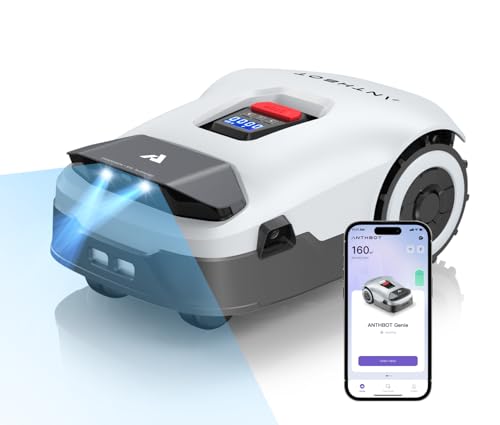
ECOVACS GOAT A2000 LiDAR PRO Robot Lawn Mowers - Review and opinions

ECOVACS GOAT A2000 LiDAR PRO
79 /100 Overall

Quick recommendation

Value for money 74/100
Ease of use 83/100
Durability 69/100
Customer reviews 88/100

Is it worth it?

The ECOVACS GOAT A2000 LiDAR PRO is aimed at homeowners who want a wire-free robot mower for a medium lawn and are especially tired of perimeter-wire installation and post-mow edge cleanup. Its biggest draw is convenience: automatic LiDAR mapping, app-based zone control, and a built-in edge trimmer in one machine. The real trade-off is that this is a premium-style automation play with a narrow 3.6-inch cutting width, so the appeal is less about brute-force mowing speed and more about reducing hands-on lawn work.

I’d put this on the shortlist for people with up to about 1/2 acre, irregular borders, and a strong preference for wire-free setup over old-school boundary installation. It makes the most sense if your lawn has multiple sections and you want scheduled upkeep rather than weekend catch-up mowing. Skip it if you want the clearest possible spec picture on steep-slope performance or if you prefer a wider-cut machine built around fewer passes and simpler expectations.

Maximum area Up to 1/2 acre
Installation Wire-free, no perimeter wire or RTK antenna
Cutting width 3.6 inches
Runtime 50 minutes
Weather rating IPX6 waterproof

Key features

Wire-free setup that actually changes the first day

This mower’s biggest convenience win is that it does not need a perimeter wire or an RTK antenna. Dual LiDAR mapping is doing the heavy lifting, which makes the initial setup route much more approachable for homeowners who do not want to dig, pin, or redesign the yard around a robot.

That matters beyond day one. If you change a bed edge, add furniture, or reorganize zones, the system is built around remapping and app control rather than physical boundary work. The payoff is flexibility, though the best fit is still a yard where navigation clarity matters more than maximum cut width.
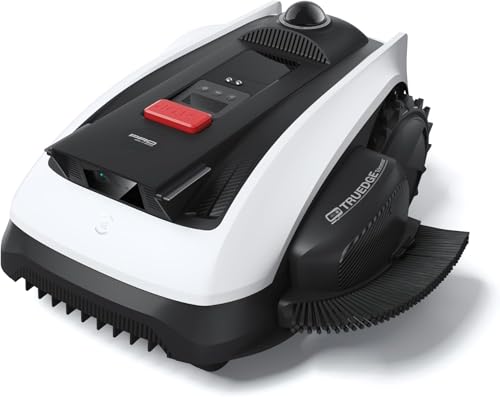
Edge trimming is the feature that separates it from many rivals

The built-in TruEdge trimmer is not a throwaway add-on. It is aimed directly at one of the most common frustrations with robot mowers: they maintain the middle of the lawn but leave cleanup work around hard borders and irregular edges.

In practice, that means this model is easier to justify if your lawn borders a driveway, sidewalk, or landscaped edge that usually needs a second tool. It will not turn every border into a zero-effort finish, but it is one of the clearest labor-saving features on this machine.

Designed for maintenance mowing, not brute-force mowing

The 32V platform, dual-blade disc system, and roughly 50-minute charging cycle all point toward a mower that is happiest staying on schedule and keeping grass under control rather than attacking an overgrown yard in one heroic session. That is the right design for Bermuda, Zoysia, Fescue, and St.

Augustine lawns that grow quickly and need regular attention. The caveat is simple: if you routinely let the lawn get long and expect one pass to fix everything, a robot mower with a compact 3.6-inch cutting width is asking you to change your habits too.

User experience

On a typical suburban yard, the first thing that changes the ownership experience is setup. This mower is built around wire-free operation with dual LiDAR mapping, so the opening scene is not trenching a perimeter wire or mounting an RTK antenna, but getting the mower placed, mapped, and organized in the app. For anyone who has avoided robotic mowing because installation sounded like a project, that alone is a meaningful shift in friction, especially in yards with fences, trees, and shaded sections.

Once the mower is working its route, the standout practical feature is the built-in TruEdge trimmer. That matters most along sidewalks, driveways, and flower-bed borders where many robot mowers still leave a strip that sends you back outside with a string trimmer. Here, the promise is a more complete finish in one routine, and that changes the value equation more than raw mowing power does. If your lawn annoys you most at the edges, this machine is solving the right problem.

For a more complex garden, the app tools are where this model earns its place. Multiple zones, no-go areas, adjustable cutting height and speed, and defined travel paths between zones make it much easier to fit around three-zone or broken-up yard layouts instead of treating the lawn as one open rectangle. The battery and 50-minute recharge cycle also suit the maintenance-mowing rhythm robot mowers are best at. The trade-off is that the 3.6-inch cutting width is compact, so this is a mower that stays ahead through automation and repeat visits, not through one broad, fast pass.

In a family yard, obstacle handling becomes the question that matters after the novelty wears off. AIVI 3D obstacle avoidance and LiDAR navigation are the right ingredients for a mower that has to deal with toys, furniture, and changing garden clutter, and the IPX6 waterproofing helps with outdoor life. What keeps me from calling it an easy universal pick is the missing slope detail. For flat to moderately uneven lawns, the feature set is well aligned. If your property has steep sections, this is not the clearest buy in the category.

Pros

  • Wire-free setup with no perimeter wire or RTK antenna
  • Built-in edge trimmer targets one of the biggest robot mower pain points
  • App supports multiple zones, no-go areas, schedules, and travel paths
  • Fast recharge and 32V platform suit regular maintenance mowing.

Cons

  • Narrow 3.6-inch cutting width puts more emphasis on frequent automated passes than on fast single-session coverage
  • No explicit slope rating makes it a weaker pick for steep yards
  • One negative ownership report points to a less forgiving fit when the mower and lawn conditions do not match well.

Community

User reviews

Buyer feedback trends in a positive direction for setup convenience, time savings, and how well the mower fits routine lawn maintenance. The strongest praise centers on letting the machine take over regular mowing with little fuss, while the clearest warning is that at least one owner gave up and returned it after poor performance.

MK

I saw real value when it was on sale, and after looking at a lot of these robots this one rose to the top for me. The size also felt manageable enough to lift and handle.

SaltyMango

This mower saves me a lot of time. My yard normally takes about 40 minutes, and getting this one set up and mapped was easy enough that the whole process felt much simpler.

Arun

I have a 3,000 sq. ft. lawn split into three zones, and it handled the whole layout very well. In about two weeks it took care of jobs that would have cost me hours to do myself.

Copnewsneakers

I returned it because it did not perform the way I needed.

Comparison

Against the Husqvarna 410iQ, the GOAT A2000 LiDAR PRO takes a more convenience-first route. Both are positioned for up to 1/2 acre, but the Husqvarna’s known 9.4-inch cutting width is far wider, while its wire-free setup depends on EPOS hardware with a charging station and RS1 EPOS reference station. Choose the ECOVACS if you want to avoid extra setup hardware and you care more about app-managed flexibility and edge trimming. Choose the Husqvarna if wider cutting coverage and a clearly stated 45% slope rating matter more than minimizing installation complexity.

Compared with traditional boundary-wire robot mowers, the GOAT A2000 LiDAR PRO is the easier sell for renters, for yards that may change over time, and for anyone who has put off robotic mowing because wire installation felt like a chore. The flip side is that classic wire-based models can still be the calmer choice when you want a simpler guidance method and do not need advanced mapping, zone routing, or edge-focused trimming. This ECOVACS is the better fit for a connected, more configurable garden routine.

Conclusion and verdict

The GOAT A2000 LiDAR PRO makes its case through convenience, not just automation. Wire-free mapping, app control, fast charging, obstacle avoidance, and a built-in edge trimmer all push it toward the kind of ownership experience that removes recurring lawn chores instead of just shifting them around. If your yard is up to 1/2 acre, has awkward borders, and benefits from zone-based scheduling, this is one of the more thoughtful robot mower packages in its class. Check the current offer, because value improves a lot when it lands in the right price band.

The clearest reason to skip it is if your lawn is steep, heavily overgrown between cuts, or if you want a wider-cut machine with a more clearly documented performance envelope. The narrow deck and missing slope figure keep this from being the safest recommendation for every yard. For the right lawn, though, it looks like a smart way to trade weekend mowing time for a more automated routine.

FAQ

Does this mower need a boundary wire?

No. It is designed to run wire-free and does not require a perimeter wire or RTK antenna.

Can it handle multiple lawn zones?

Yes. The app supports multiple mowing zones, no-go areas, travel paths between zones, and custom schedules.

Karen Brooks

About the author

Karen Brooks

I'm a 50-year-old mom and honest tech reviewer from the USA. I test robot vacuums and share what really works for busy households. Simple, real, no fluff.