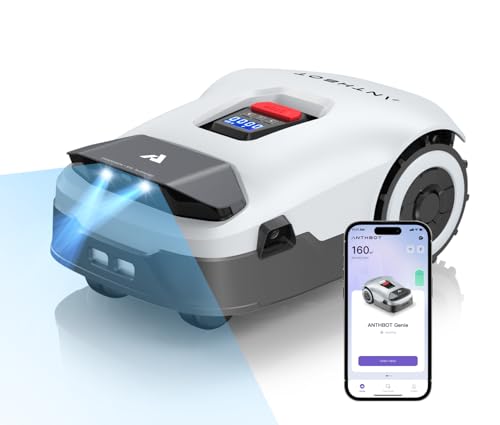
Maximum slope
80 %
Maximum slope
If you have a large, uneven yard and want a mower that can handle slopes, zones, and route planning without a perimeter wire, the LUBA 3 5000H is aimed right at that job. Its 1.25-acre rating, AWD drivetrain, 80% slope claim, and 50-zone management make it relevant for properties that punish simpler robots. The trade-off is clear from the start: this is a premium, heavy-duty mower with a premium price, and it makes the most sense when your lawn complexity justifies the spend.
I’d put this in the buy lane for owners who want a wire-free robot that can stay on schedule, map multiple areas, and keep the yard looking finished with less weekly effort. Skip it if your lawn is small, mostly flat, or simple enough that a cheaper robot would do the same job with less cost and less setup overhead. The real question is not whether it can mow, but whether your property is complex enough to earn its keep.
| Maximum area | 1.25 acres |
|---|---|
| Maximum slope | 80% (38.6°) |
| Installation | Battery powered, automatic, wire-free navigation with 360° LiDAR, NetRTK, and AI vision |
| Cutting width | 400 mm |
| Cutting height | 2.2"-4.0" |
| Multi-zone management | Up to 50 mowing zones |
The mower combines 360° LiDAR, NetRTK, and dual-camera AI vision, which is the kind of setup that matters when a yard has trees, boundaries, and changing conditions. That mix is valuable because it gives the mower more than one way to stay oriented, instead of relying on a single navigation method.
For a buyer, this is the difference between a robot that only works in ideal conditions and one built for a more demanding property. The practical upside is less rescue work and more consistent coverage; the practical caution is that a complex yard still benefits from clean boundaries and a sensible zone layout.
Four-wheel drive and the 80% slope rating are the headline reasons this model belongs in a tougher yard. That capability matters most on banks, uneven ground, and transitions where lighter robots lose confidence or traction.
In use, that means a better chance of keeping the mowing schedule intact across rough sections of the property. It also narrows the fit: if your lawn is flat and simple, you are paying for capability you may never use.
Support for up to 50 mowing zones is a real advantage for properties with front, back, side, and separated lawn areas. It turns the mower into a better match for homes where the yard is split into distinct jobs rather than one open field.
That flexibility reduces the need to micromanage every session and helps the machine fit around real household layouts. The trade-off is straightforward: the more complex the property, the more important the initial mapping becomes.
For a property with multiple sections, this mower’s appeal is how much yard it can organize for you. The 1.25-acre rating and 50-zone support matter most when the lawn is not one clean rectangle, because that is where simpler robots tend to waste time or need more babysitting. Here, the fit is strongest for owners who want a machine that can keep working across different parts of the yard instead of treating every transition like a fresh headache. The flip side is that this is not a casual buy for a tiny lawn; the price and capability are built for a more demanding property.
On rough ground, the AWD layout and 80% slope capability are the parts that change the ownership experience. A steep bank, a bumpy back section, or a yard with curbs and roots is exactly where a standard robot starts to feel fragile, while this one is built to keep moving with less drama. That also explains why the finish can look so good in the right yard: a 15.7-inch cutting width and dual-disc setup are aimed at covering ground efficiently rather than creeping along like a small compact model. The practical trade-off is that a machine this capable still rewards a cleaned-up lawn; sticks, debris, and clutter will always make robot mowing less graceful.
The setup story is more about smart planning than plug-and-forget simplicity. Wire-free positioning is a major advantage because it removes the perimeter-wire project, and the app-based zone management gives the mower a real place in a connected home routine. That said, a complex property still asks for thoughtful mapping and zone layout, so the first day matters more here than it would on a basic mower. Once the layout is right, the upside is obvious: more automation, less edging pressure, and far fewer manual interventions during the week.
Community
The pattern is consistent: buyers are most convinced by the cut quality, the easy setup, and the way the mower takes over routine yard work, while the main frustrations cluster around connectivity, mapping, and battery coverage on more demanding layouts. The practical lesson is that this model shines when the yard is well matched to its navigation and zone tools, not when it is being asked to solve every landscaping problem at once.
As someone who works long hours, this has made yard care much easier and the cut quality is surprisingly good.
After waiting years to buy in, I can say it was worth it and my yard has never looked better.
Setup was straightforward with Bluetooth, mapping was easier than I expected, and the cutting quality is excellent.
The automation is the big win for me, but the real-world battery coverage came in below the marketing claim.
| Attribute | Mammotion LUBA 3 5000H Current | Mammotion LUBA 3 5000H garage | Mammotion LUBA 3 3000H garage | Husqvarna 430X |
|---|---|---|---|---|
| Price | $2,708.00 | Out of stock | Out of stock | $2,167.79 |
| Maximum area | 1.25 acres | 1.25 acres | 0.75 Acre | Up to 0.8 acre |
| Maximum slope | 80% (38.6°) | 80% | 80% | 45-degree slopes |
| Installation | Battery powered, automatic, wire-free navigation with 360° LiDAR, NetRTK, and AI vision | Battery powered, automatic, wire-free navigation with RTK and AI vision | Battery powered, automatic, wire-free navigation with RTK and AI vision | Self-installation kit included with boundary wire and guide wire |
| Cutting width | 400 mm | 400 mm | 400 Millimeters | 9 inches |
| Cutting height | 2.2"-4.0" | 2.2"-4.0" | 2.2"-4.0" | - |
| Editorial score | 78/100 | 78/100 | 78/100 | 75/100 |
Against the Mammotion LUBA 3 5000H garage, this version is the cleaner choice if you want the mower itself without leaning on the garage bundle. The core route is the same: 1.25-acre coverage, wire-free navigation, AWD, and multi-zone control. The garage bundle only makes more sense if storage and weather protection are part of the purchase plan from day one.
Compared with the Husqvarna 410iQ, the LUBA 3 5000H is the better fit for buyers who want a larger-area, more slope-capable robot with LiDAR and vision in the navigation stack. The Husqvarna route is smaller at .5 acre and uses an EPOS reference-station setup, so it suits a more compact property and a different installation style. If your yard is bigger and more demanding, the Mammotion is the more ambitious tool; if your lawn is smaller and you prefer the Husqvarna ecosystem, the 410iQ is the simpler lane.
The ECOVACS GOAT A3000 LiDAR PRO is the closest alternative for buyers who want wire-free convenience but do not need the same acreage target or slope ambition. It is positioned for up to 3/4 acre, so it makes more sense for a smaller suburban lawn where LiDAR matters more than brute-force coverage. The Mammotion wins when the yard is larger, steeper, and more zone-heavy.
Compare with
Add a second model to activate the direct comparison.


No products match that filter combination.
The LUBA 3 5000H makes the strongest case when the yard is large, uneven, and split into multiple areas that benefit from wire-free automation. In that setting, the AWD chassis, 1.25-acre rating, 80% slope claim, and 50-zone management line up with a real ownership payoff: less manual mowing, less route management, and a cleaner-looking lawn with less weekly effort. If you are shopping this kind of robot, this is one of the more convincing premium routes, and it is worth checking the current offer if the fit matches your property. The reservation is price and complexity. At this level, it is not the sensible choice for a small or uncomplicated lawn, and the broader ownership experience still carries some friction around mapping, connectivity, and battery coverage on tougher layouts. If your yard does not need that much capability, a smaller or simpler robot will be easier to live with and easier to justify.
No, it is built for wire-free navigation with LiDAR, NetRTK, and AI vision.
It is a better match for larger, more complex lawns with slopes and multiple zones than for a small flat yard.
Review published on